Invasive Species
- Basics
- a species that is not native to a specific location or region
- an organism that causes ecological and/or economic harm in a new environment
- generally spread by human activities
- often unintentionally
- capable of causing:
- extinctions of native plants and animals
- reducing biodiversity
- competing with native organisms for limited resources (food, space)
- altering habitats
- invading species tend to have no natural predators in the new area
- they can become the dominant species
- changes in the ecosystem can affect life processes of existing organisms
- courtship, mating, rearing, feeding
- economic changes can occur when certain species die out or relocate
- human communities that rely on certain fish may find themselves unable to find those fish
- this can cause economic collapse for such communities
- i.e. loss of snapper availability
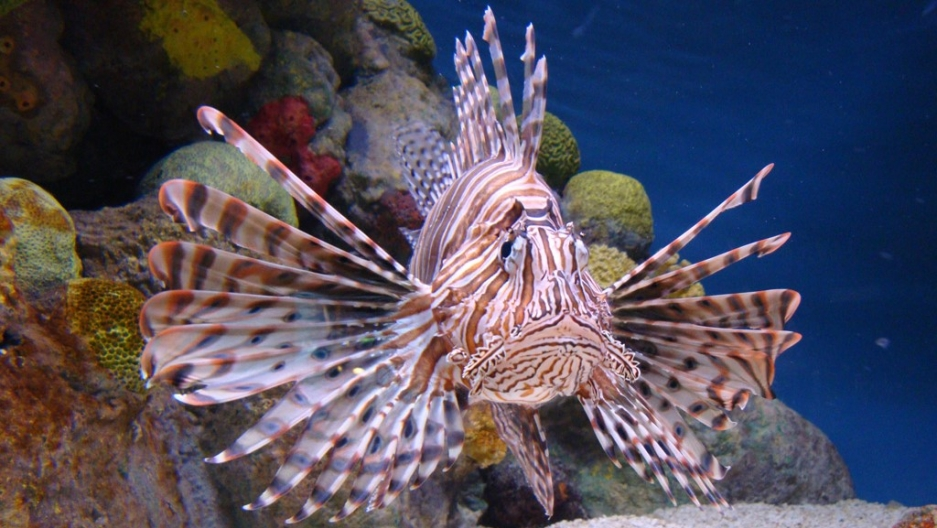
- Lionfish
- Appearance
- distinctively brown or maroon
- white stripes covering head and body
- fleshy tentacles above their eyes and below the mouth
- venomous spines
- fan-like pectoral fins
- can grow as large as 18 inches, while juveniles may be as small as 1 inch or less
- Locations
- native to Indo-Pacific region
- Indian Ocean and South Pacific Oceans
- first lionfish was reported in South Florida waters in 1985
- currently flourishing in non-native Southeast and Caribbean coastal waters
- located from Florida to North Carolina
- juvenile lionfish have been collected in waters off Long Island and Bermuda
- Habitats
- found in mostly all marine habitat types
- such as warm marine waters of the tropics
- have been found in water depths from 1 to 300 feet on hard bottom, mangrove, seagrass, coral, and artificial reefs (like shipwrecks)
- Population
- lionfish population continues to grow and increase its range
- lionfish have no known predators in the area
- reproduce all year long; a mature female releases roughly two million eggs a year
- cannot be eliminated using conventional methods
- Control
- few options are available to control the outbreak of this species
- capture and kill to reduce population
- possible solution is to overfish
- it is safe to eat these fish
- they're apparently delicious
- positive economic impact

- Wakame
- Basics
- Undaria pinnatifida
- "sea mustard"
- edible seaweed
- type of marine algae
- highly fertile
- sea vegetable
- brown algae
- grows up to nine feet
- Habitat
- native to cold temperate coastal areas
- Japan, Korea, China
- recently established in warmer temperate regions
- New Zealand, the United States, Belgium, France, Great Britain, Spain, Italy, Argentina, Australia and Mexico
- transmitted naturally and through human influence (i.e.: attached to hulls)
- Danger
- nominated one of the 100 worst invasive species in the world
- can cause changes to native community composition at all trophic levels
- reduce abundance and diversity of understory algal assemblages
- out-compete some native macroalgal species
- affect the abundance and composition of gastropods, crabs, urchins and fish
- Control
- harvest for human consumption
- subtly sweet, but distinctive and strong flavor and texture
- most often served in soups and salads
- cleaning off hulls, buoys, ropes, docks, rocks, etc.
- Health Benefits
- low in calories; rich in nutrients
- may support proper thyroid function
- may reduce blood pressure, heart disease risk
- may lower cholesterol levels
- may decrease blood sugar
- may aid weight loss
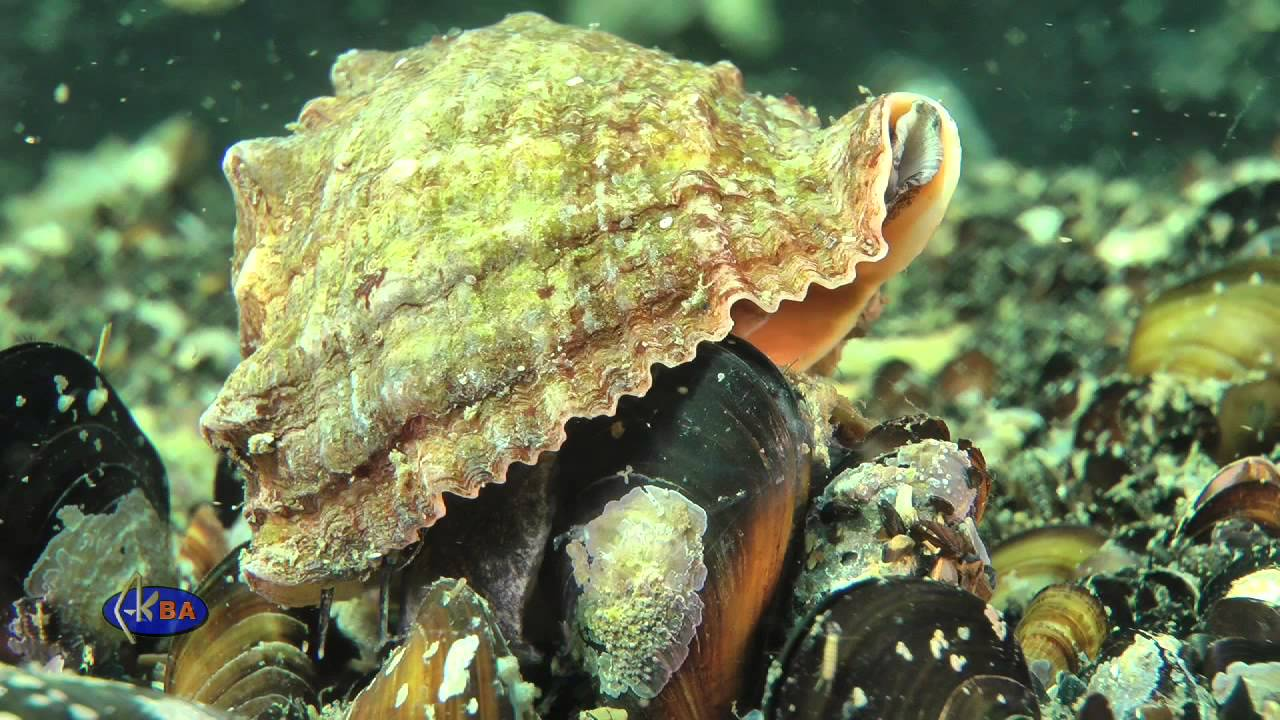
- Veined Rapa Whelk
- Appearance
- rounded shell with a large body whorl
- smooth spiral ribs
- end in blunt knobs at shoulder and body whorl
- small elongated teeth
- some have blue-black vein patterns
- shell height can reach 7 inches
- Basics
- Rapana venosa
- large predatory sea snail
- marine gastropod mollusc or whelk
- in the family Muricidae, the rock shells
- feeds on bivalves
- clams, oysters, mussels
- can live more than 10 years
- Location
- native to western Pacific
- Sea of Japan, Yellow Sea, East China Sea, Bohai Sea
- recently found as an exotic in the Chesapeake Bay on the eastern coast of the United States
- may spread to S. Carolina, Massachusetts
- likely introduced to the bay by larvae in ballast tanks being released
- Habitat
- burrows deeply into compact sandy areas
- can tolerate large temperature fluctuations, polluted water and low oxygen levels
- in winter, may migrate to deeper waters to avoid freezing surface waters
- Danger
- lack of competition from other gastropod species and direct predators
- i.e.: thick shell prevents feeding by sea turtles and other local whelk
- caused significant changes in the ecology of bottom-dwelling organisms
- became marine pests in the Black Sea
- Control
- bounty program was instituted in Virginia
- encouraged capture of live rapa whelks
- goal to determine life patterns to develop better control techniques
- younger whelks can be eaten by natural predators because of softer shells, but this can't be controlled
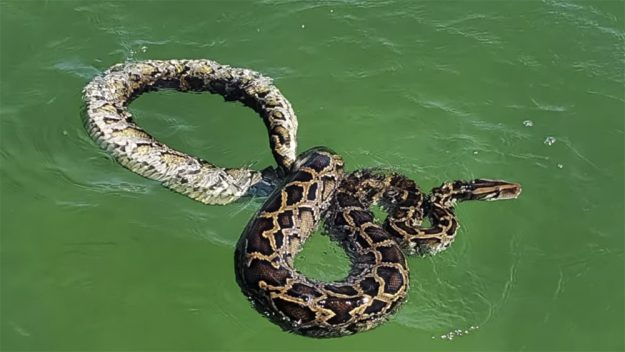
- Burmese Python
- Basics
- Python bivittatus
- carnivorous
- dark-colored snakes with many brown blotches bordered in black down the back
- one of five largest species of snakes
- can grow to almost 17 ft
- females average slightly longer, but are considerably heavier, bulkier than males
- Location
- native to Southern and Southeast Asia, eastern India, Thailand, southern China, Hong Kong, etc.
- needs a permanent source of water
- invasion has been particularly extensive, notably across South Florida, Everglades
- have been seen in Biscayne Bay, Florida
- some are kept as pets
- Habitat
- lives in grasslands, marshes, swamps, rocky foothills, woodlands, river valleys, and jungles with open clearings
- hatchlings have been shown to survive in brackish (slightly salty) water
- have been spotted in the ocean
- have shown possibility of being able to survive in full marine environments
- Danger
- in areas where the snakes are well established, foxes and rabbits have disappeared
- raccoon, opossum, white-tailed deer, bird, coyote, Florida panther populations are in jeopardy
- compete with alligator; prey on each other
- Control
- hunting
- understanding preferred habitat is key
- though they can thrive in marsh, tend to prefer places they can blend in
- nocturnal
- screening mosquito blood for python DNA
- hunting contest incentives
- 2013 Python Challenge